
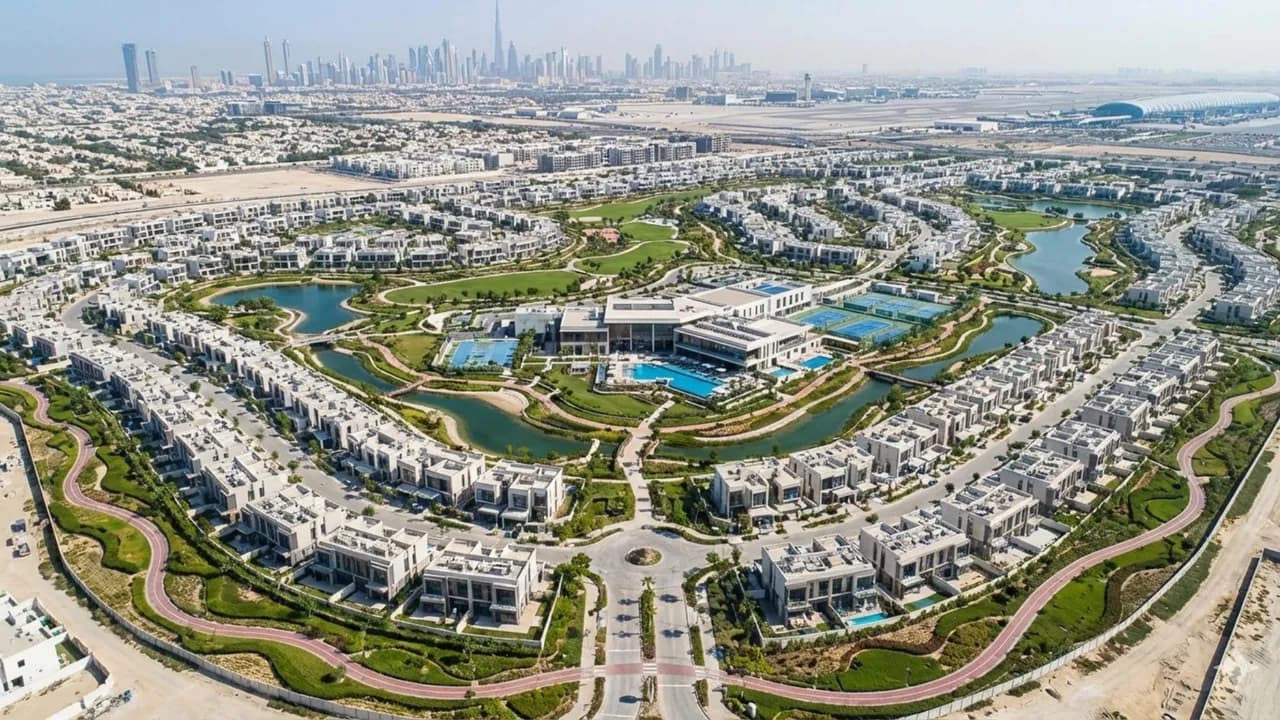
If you’re considering a villa-focused, lifestyle-led master community for long-term capital growth and future end-user demand, this is the key idea: The Heights is positioned around wellness, open green space, and a clubhouse-style social core, which are exactly the features that keep communities desirable even when the wider market gets crowded. Emaar describes it as a destination designed for wellbeing and connection, with a central Wellness Centre and a master plan built around movement, calm, and community living.
The Heights By Emaar: Investment logic in plain English
A wellness-first master plan is not just marketing
In Dubai, communities that age well usually have two things: strong planning and a lifestyle that people actually use. Here, the “wellness” angle is not just a gym room in a building. Emaar’s own description highlights a central Wellness Centre as a social hub and a community layout that encourages daily routines like walking, fitness, and outdoor time. That matters because real demand is driven by how people live, not only how a brochure looks.
What wellness-led planning can do for your resale later
When a community is built around greenery, trails, and shared lifestyle spaces, it often supports:
Better end-user demand (families and professionals pay for comfort and routine)
Stronger long-term desirability (buyers want “liveable communities,” not just units)
More stable resale interest (especially for well-positioned villa clusters)
Why villas can be a smarter “hold” than small units in some cycles
Apartments can be great, but in certain market phases, villa communities attract a different buyer: families upgrading, lifestyle-driven homeowners, and long-hold investors. Villa neighborhoods also tend to have fewer identical units compared to towers, which can help protect value when many apartments compete on price.
Look for these “value protectors” in any villa purchase
Low-density planning (less crowding, more privacy)
A community anchor (clubhouse, wellness centre, parks)
Easy access to major roads (so daily commute doesn’t become a pain point)
A product type that stays in demand (practical layouts, family sizing)
Location and connectivity: the simple test investors should use
A community can be peaceful and still be well connected. What you want is a location that feels private inside, but doesn’t punish you outside. While different portals describe the exact placement in slightly different ways, the consistent theme is that The Heights sits in a growth corridor where Dubai keeps expanding, with access routes designed to connect residents to key destinations over time. When you assess this, don’t rely on “minutes to Downtown” claims alone. Ask for the map, access roads, and what nearby communities are already mature.
Quick reality-check questions to ask your agent
What are the main entry/exit roads today, and what is planned later?
Which nearby communities are already established, and which are still developing?
What is the likely tenant profile when the first handovers happen?
The three clusters buyers keep comparing: SERRO, SERRO 2 and SALVA
Most buyers don’t invest in a “name” — they invest in a specific product inside a community. In early phases, villa collections like SERRO, SERRO 2 and SALVA get compared because they represent the first wave of homes and can shape how the market perceives the community. Public project pages commonly position these as villa-focused releases within the wider Heights master plan.
How to compare clusters like a serious buyer (not an emotional buyer)
When you shortlist, compare them on:
Plot position: corner vs mid, single-row vs facing another unit, distance from main roads
Orientation: sunlight and heat load matter in Dubai (and so does privacy)
Layout efficiency: storage, maid’s room, family living zones, usable outdoor space
Community adjacency: parks, trails, and the “walk-to” factor often boost daily satisfaction
Exit liquidity: which product type will have more buyers when you resell?
What makes this community attractive to end-users (and why investors should care)
Even if you’re investing, end-users are your future buyers. Communities that families truly want are easier to resell and often hold value better. Emaar describes the community as being built around belonging, shared rituals, and daily lifestyle spaces, which typically appeals to:
Families who want greener surroundings and safer internal streets
Professionals who want calm living without feeling “far away from life”
Buyers who like community living but still want privacy and space
The “weekend test”
Ask yourself: would you enjoy spending a full Saturday inside the community without leaving? If the answer is yes (walks, wellness, social spaces, kids’ areas), it’s usually a good sign the community will attract long-term demand.
Risks and how to manage them like a smart investor
Off-plan timelines and market cycles
Any off-plan investment comes with timeline risk. Handover schedules can shift, and market conditions can change. The solution is not to avoid off-plan; it’s to buy with a plan:
Choose a product that end-users love (because they drive resale)
Keep buffer liquidity for milestones
Avoid “stretch budgets” where one delay breaks your plan
Documents you should always request
Payment plan with dates and milestones
Floor plan and plot plan for the exact unit
Community master plan (so you understand what surrounds your home)
Written clarification of what is included in finishes and fittings
Competing supply: the silent value killer
If too many similar villas deliver around the same time, rent and resale can get competitive. This is why cluster-level differentiation matters. You want a unit with something that stands out naturally:
Better position in the community
Better orientation and privacy
More functional layout
Closer to community anchors (without being too close to noise)
Service charges and running costs (don’t ignore this)
Many buyers focus only on price and forget the long-term cost of ownership. For villas, consider maintenance, landscaping, and community service charges. Even if you don’t have final numbers today, you can ask for comparable ranges from similar Emaar villa communities to plan responsibly.
Who should consider investing here (and who should pause)
Best fit profiles
This community tends to suit:
Long-hold investors who want a lifestyle-led asset, not a quick flip
End-users upgrading to a greener, calmer environment
Families planning ahead for space and community living
Investors who value brand strength and master-planned execution (a key reason many people prefer established developers)
You should pause if…
You need immediate rental income (ready properties may fit better)
Your budget has no buffer for delays or milestone payments
You’re buying only because of hype, without a clear unit-level comparison
Why Autograph Realtors stands out in this community search
Most people don’t fail in Dubai real estate because they picked the “wrong community.” They fail because they picked the wrong unit, on the wrong terms, without understanding the real total cost and exit plan. At Autograph Realtors, we stand out by being shortlist-first and paperwork-clear: we help you compare SERRO vs SERRO 2 vs SALVA (or any other release) based on what actually drives resale and livability — plot position, privacy, orientation, layout efficiency, and future demand — not just a starting price. We also keep the process calm and structured: verification, written comparisons, unit pros/cons, and step-by-step documentation, so you feel in control at every stage.
A practical “investor checklist” before you reserve
Use this to keep your decision clean and logical.
The unit fundamentals
Is the layout practical for family living?
Does the villa have privacy and good natural light?
Is the outdoor space actually usable?
The community fundamentals
Is there a clear wellness/clubhouse anchor and green network?
Are internal roads designed for quiet residential living?
Is the community planned as low-density and family friendly?
The investment fundamentals
What is your hold period: 3 years, 5 years, 7+ years?
What is your likely exit: resale to an end-user, or keep and rent?
What competing supply will deliver around the same time?
The “don’t skip” due diligence
Verify every payment request and get receipts
Keep everything in writing (unit number, view, inclusions)
Don’t rely on verbal promises about upgrades or special terms
Final thought: invest in the product, not the headline
The smartest investors treat a community name as a starting point, not the decision. The real decision is the exact villa you’re buying, its position, its layout, and whether it will still feel special when the wider area matures. If you want, share your budget range and whether you prefer a 3, 4, or 5-bedroom product — and we’ll build a clean shortlist and comparison path around SERRO, SERRO 2 and SALVA so you can choose with confidence, not pressure.