
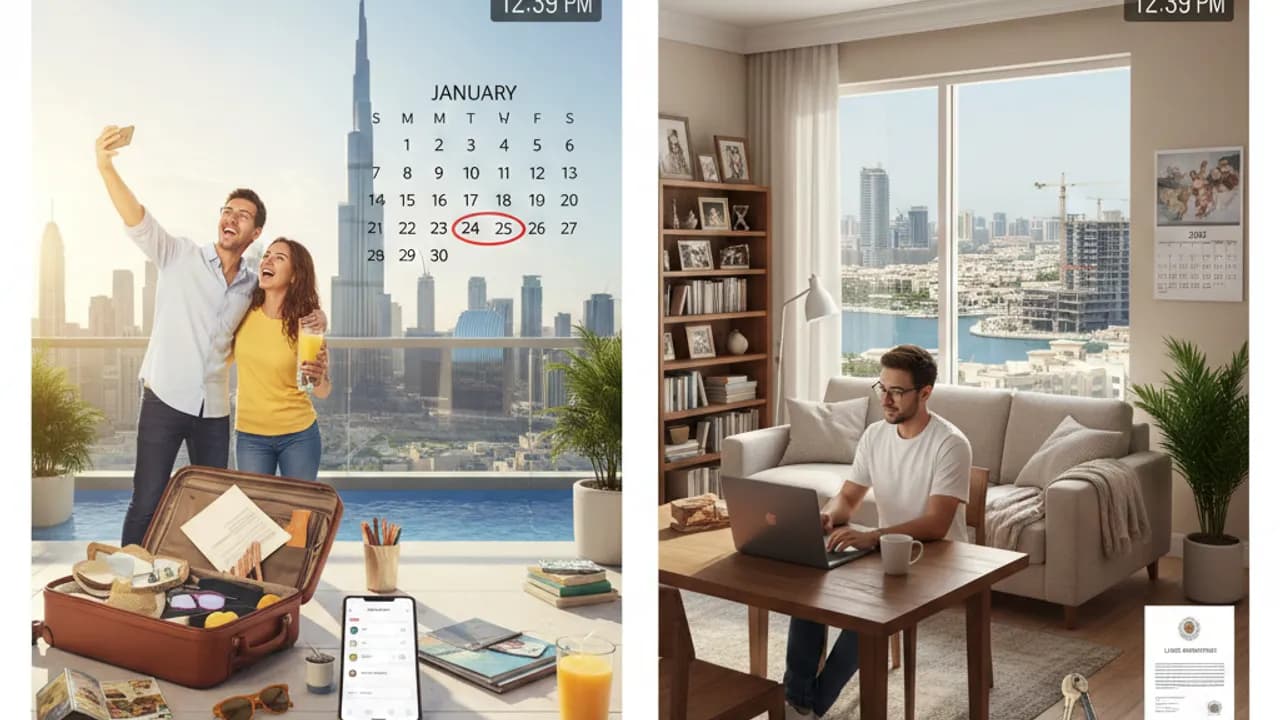
If you want the most practical answer: short-term renting (holiday home / vacation stay style) can earn more in peak season, but it needs licensing, active management, and you’ll have higher running costs. Long-term leasing (annual tenancy) is usually steadier and simpler, with fewer moving parts and more predictable cash flow. The best strategy in the UAE depends on your time, risk comfort, building rules, and whether your unit fits tourists or residents.
Short-Term vs Long-Term Rental in Dubai
First, define the two strategies in real life
Before numbers, get the “how it works” clear—this is where many investors get confused.
Short-term renting (short let / holiday home / serviced accommodation)
This is the model where guests stay for a few nights to a few weeks. Think business travelers, tourists, event visitors, and families on a break. In Dubai, operating legally typically requires registering and getting a permit through the Dubai Department of Economy and Tourism (DET) Holiday Homes system (owners or professional operators).
What this model usually involves:
Furnished unit setup (ready-to-live standard)
Frequent turnovers (cleaning, laundry, checks)
Guest communication, check-in/out, deposits, and issue handling
Dynamic pricing (rates change weekly or even daily)
Long-term leasing (annual lease / traditional tenancy)
This is the classic rental contract model, often 12 months, typically registered through Ejari in Dubai to formalize tenant rights and responsibilities.
What this model usually involves:
A tenant staying months to a year (or longer with renewals)
Lower day-to-day workload
More predictable income, but fewer chances to “spike” revenue in high season
Compliance and “do it legally” basics in the UAE
If you’re deciding between the two, compliance isn’t a small detail—it can make or break the plan.
Short-term: permits and registration matter
Dubai requires holiday homes to be registered via DET’s Holiday Homes portal, and the process includes adding a unit and submitting supporting documents, then receiving approval and classification steps.
Key takeaway:
You cannot treat short-term as “just list it and hope.” Make sure the building/community rules also allow it, and you (or your operator) follows the correct permit route.
Long-term: Ejari and tenancy structure
For long-term leasing in Dubai, Ejari is the system used to register tenancy contracts under the Dubai rental law framework. It’s a major part of protecting both landlord and tenant rights.
Key takeaway:
If your goal is simplicity and reduced compliance load, long-term is usually easier to manage.
Money talk: how each strategy earns (and what costs people forget)
This is where most investors get misled by screenshots of “gross income.” You want net income and realistic effort.
Short-term income = higher ceiling, but more deductions
Short-term revenue looks attractive because you can charge higher nightly rates during peak months. But the cost structure is heavier:
Cleaning and laundry per turnover
Utilities and internet (usually paid by the owner)
Replacing small items (linens, kitchenware, consumables)
Platform fees and payment processing
Property management fees (if you’re not self-managing)
More frequent maintenance calls (guests treat it like a hotel)
Also, seasonality is real. Multiple market dashboards report Dubai short-term rentals having strong seasonal swings, often stronger in cooler months and weaker during the hottest months. For example, third-party STR analytics sources commonly show average occupancy around the low 70% range across 2025, with noticeable month-to-month changes. Treat these as directional indicators, not guarantees.
A simple way to estimate:
Peak months: strong occupancy + higher nightly rates
Off months: lower occupancy + you may discount to stay competitive
What matters is your annual average, not your best month.
Long-term income = steadier, fewer moving parts
Long-term leasing usually has:
One tenant turnover per year (or less)
Lower operational cost (no frequent cleaning cycles)
Lower wear-and-tear from constant guest traffic
More predictable monthly/annual cash flow
But you still need to plan for:
Vacancy risk between tenants (void period)
Maintenance and repairs
Community service charges (always check responsibility split)
Rental pricing rules/benchmarks and renewal negotiations (Dubai’s rental market is regulated and structured through official frameworks and guidance)
Lifestyle demand: who is your “customer”?
Your strategy should match your tenant/guest profile. This is the easiest way to choose correctly.
Short-term works best when your unit suits visitors
Short-term tends to perform better when:
The unit is in a visitor-friendly location (tourism, events, business travel zones)
The building has good access, parking, and smooth check-in experience
The layout is practical for short stays (clean design, good storage, strong AC)
The view/experience is a selling point (skyline, waterfront, walkability)
Guests care about:
Speed and convenience
Cleanliness and comfort
Wi-Fi reliability
Smooth check-in and quick support
If your unit is in a strictly family-focused residential pocket far from visitor movement, long stays often fit better.
Long-term works best when your unit suits residents
Long-term tends to perform better when:
The community is built for daily living (schools, supermarkets, commute)
Tenants are families or working professionals
The building management is stable and facilities are maintained
The layout supports routine life (laundry space, storage, parking, privacy)
Tenants care about:
Quiet living
Maintenance responsiveness
Practical commute
Building reputation and service levels
Effort and operations: what your time is really worth
Be honest about your time. This single factor decides the “best” strategy for many owners.
Short-term is a small hospitality business
Even with a management company, you still need a mindset of service:
Guest messaging and expectations
Handling complaints quickly
Coordinating cleaning schedules
Managing key handovers or smart lock systems
Reviewing pricing weekly
If you’re busy and hate operational complexity, this model can feel like a burden unless you outsource it fully (which reduces your net).
Long-term is closer to asset management
It’s usually:
Tenant screening once
Contract/Ejari registration
Periodic maintenance
Renewal discussions
It’s calmer and more predictable, especially if your goal is to hold the property long-term.
Risk: what can go wrong (and how to reduce it)
Both strategies have risks. Smart owners plan for them upfront.
Short-term risks
Compliance mistakes (wrong permit process, missing registrations)
Building/community restrictions (some places discourage frequent guest flow)
High competition (many similar units can cause price wars)
Guest-related damage or neighbor complaints
Revenue volatility (seasonality, sudden dips)
How to reduce risk:
Follow the DET Holiday Homes process properly (or use a reputable licensed operator)
Choose a building known for smooth operations and guest suitability
Focus on a “repeatable standard” (hotel-level cleanliness, consistent amenities)
Keep a maintenance buffer and replacement fund
Long-term risks
Rental pricing and renewal friction
Tenant default or disputes (less common with good screening, but possible)
Vacancy periods between tenants
Property condition issues over time
How to reduce risk:
Use strong tenant screening
Keep everything in writing and properly registered through Ejari
Stay proactive with maintenance so small issues don’t become costly
How to choose the right strategy for your property
This is the decision shortcut that works in the UAE market:
Choose short-term if most of these are true
You want higher upside and are okay with variable monthly income
You can furnish and maintain the unit to a high standard
Your building and location are visitor-friendly
You are willing to manage (or pay for management) like a hospitality product
You understand the permit/registration steps and will stay compliant
Choose long-term if most of these are true
You want stable, predictable rent
You prefer less daily work and fewer operational headaches
Your unit suits residents better than visitors
You want simpler compliance and smoother budgeting
You plan to hold the property and value stability over monthly spikes
A practical hybrid strategy many UAE landlords use
If you want balance, some owners use a seasonal approach:
Short-term during peak demand months
Switch to a medium-term furnished lease during slower months (monthly stays for corporate or relocation clients)
This can work well, but only if:
Your building rules allow it
You can manage transitions without long vacancy gaps
Your furnishing level suits both audiences
Why Autograph Realtors stands out
Autograph Realtors stands out because we don’t push a one-size-fits-all answer. We look at your exact unit, building rules, location demand, furnishing plan, and your time availability—then map a strategy that’s realistic for the UAE market. We focus on net results (after costs), not just “gross rent,” and we help owners avoid common traps like buying a unit that looks good on paper but doesn’t match the right tenant/guest profile.
Final takeaway: pick the strategy that fits your life, not just the numbers
Short-term renting can be powerful in Dubai when done legally and professionally, especially in high-demand areas and peak seasons—but it’s hands-on and cost-heavy. Long-term leasing is usually calmer, more stable, and easier to plan around, especially if you want steady income and lower operational stress.