
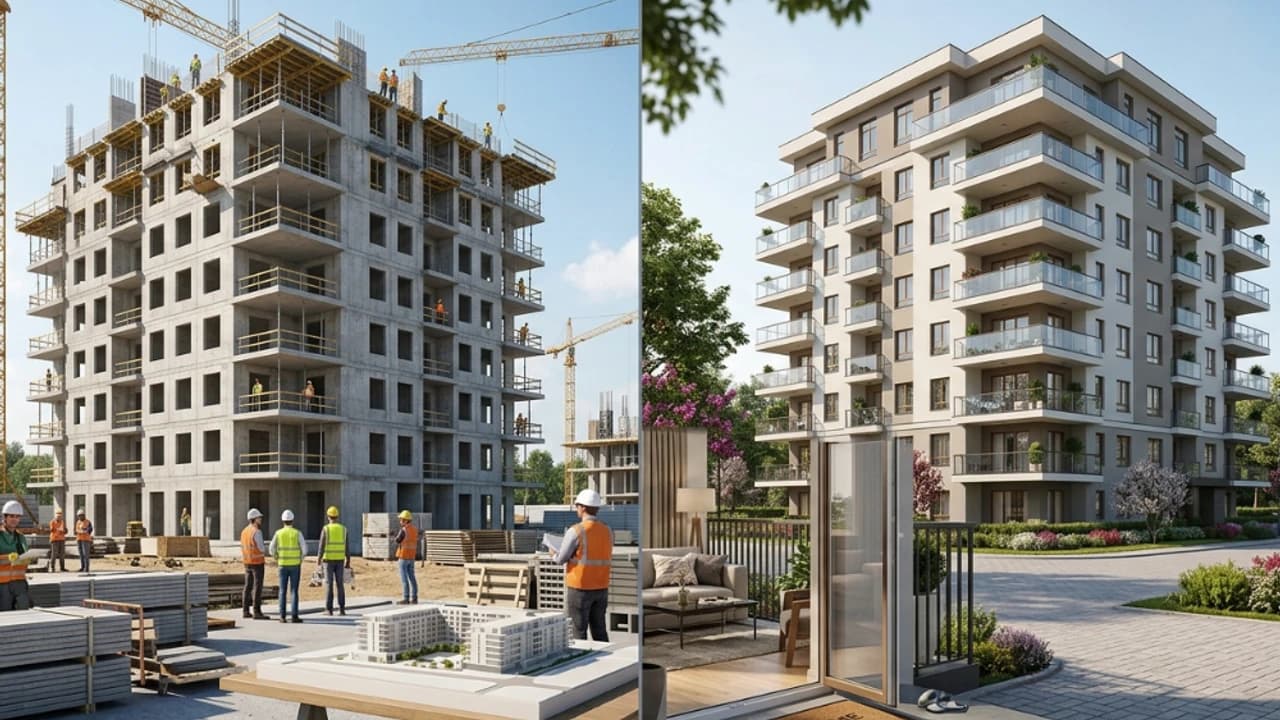
If you are trying to decide between an off-plan property and a ready one, you are already asking the right question. Off-plan properties, bought before or during construction, typically come priced 10 to 30 percent below comparable ready units in the same location, offering flexible payment plans spread over two to five years and genuine potential for capital appreciation before you even take the keys. Ready properties, on the other hand, give you immediate rental income, full mortgage options with loan-to-value ratios of up to 80 percent, and the ability to physically inspect every corner of the unit before signing. Neither option is universally better. The right choice depends entirely on your financial position, timeline, and investment goals — and this guide breaks both sides down so you can decide with confidence.
Understanding the Two Options Before Comparing Them
Before jumping into pros and cons, it helps to understand exactly what each category means in today's market.
An off-plan property is one you purchase from a developer before the building is completed, sometimes before construction has even started. You buy based on architectural plans, floor layouts, and show apartments, and your payments are typically structured in installments tied to construction milestones. A ready property, also called a secondary market or existing property, is a fully completed unit available for immediate transfer, inspection, and occupancy.
In Dubai alone, off-plan transactions accounted for 69.3 percent of all property deals in 2024, rising further to 72.9 percent in 2025 according to data from Cavendish Maxwell. This shift toward off-plan buying reflects both developer incentives and growing investor confidence in the UAE market. The total value of off-plan sales in Dubai reached AED 448.1 billion in 2025, up dramatically from previous years, signaling that this is no longer a niche investment approach but a mainstream one.
Pros of Buying Off-Plan Property
Lower Entry Price with Real Upside Potential
Off-plan developers price their units below the anticipated market value to attract early buyers and fund construction costs. This creates a built-in advantage for early investors. In active markets like Dubai, off-plan buyers have historically seen capital appreciation of 20 to 40 percent by the time of handover in well-located projects. Off-plan sales saw a 43.70 percent year-on-year growth rate according to the Dubai Land Department's Annual Report 2024, a figure that underlines strong investor demand and confidence in future value.
The logic is simple. You lock in a price today that reflects the current state of the market, and by the time construction is complete two to four years later, demand-driven price growth can put you significantly ahead.
Flexible Payment Plans That Spread the Financial Burden
One of the most compelling advantages of off-plan buying is the payment structure. Most developers offer plans that require only 10 to 20 percent on booking, with the remainder spread across construction milestones, and in many cases, post-handover installments that allow buyers to pay from rental income after taking possession. This kind of financial flexibility simply does not exist with ready properties, which require full payment at transfer — either in cash or through a mortgage.
For buyers who do not have the full amount available upfront, off-plan effectively opens a door that ready property keeps closed. Some developers also offer to cover the 4 percent Dubai Land Department transfer fee as a launch incentive, further reducing the initial cost burden.
First Pick of the Best Units in a Development
Buying at the launch stage gives you access to the full inventory of a project before anyone else. This means you can select preferred floors, specific views, larger layouts, or corner units that will command higher resale values and rental premiums later. By the time a building is completed and units are available as ready properties, the premium units are almost always gone. What remains is what others passed on.
Brand New Condition and Modern Building Standards
Off-plan properties are built to current design standards, energy efficiency regulations, and modern lifestyle expectations. Smart home features, open-plan layouts, high-speed fiber infrastructure, and efficient cooling systems are now standard in new developments in a way that older ready buildings simply cannot match. When you buy off-plan, you are getting a product built for today's renter or end-user, which is a meaningful advantage when it comes time to lease or resell.
Assignment Sales: The Ability to Profit Before Completion
A less-discussed advantage of off-plan investment is the assignment sale, commonly called flipping before handover. Once a buyer has paid a set percentage of the purchase price, typically 30 to 40 percent, many developer contracts allow the unit to be sold to a new buyer before the project is complete. In a rising market, this allows investors to realize a capital gain without ever collecting the keys, making off-plan an attractive vehicle for short to medium-term capital growth strategies.
Cons of Buying Off-Plan Property
Construction Delays Are a Real Risk
Around 40 to 50 percent of Dubai off-plan projects experience some form of handover delay, ranging from a few months to over two years, according to Real Estate Club Dubai's 2026 analysis. While Dubai's RERA regulations and escrow account requirements significantly reduce the risk of complete project failure, delays can disrupt personal plans, affect investment timelines, and create cash flow complications.
The mitigation here is straightforward: buy from developers with a proven on-time delivery track record. Established names with a history of completing projects on schedule carry far less risk than smaller or newer developers with no completed portfolio.
No Rental Income During the Construction Period
If your goal is generating income from day one, off-plan is not the right fit. You will typically wait two to four years before the property is ready to rent. During this period, you are paying installments with no income to offset them. For investors who need cash flow, this waiting period can be a genuine hardship.
Limited Mortgage Options Until Near Completion
Banks in Dubai currently cap the loan-to-value ratio at 50 percent for off-plan purchases, compared to up to 80 percent for ready properties. This means off-plan buyers must have more cash on hand, and access to traditional mortgage financing is limited until the project reaches a certain completion threshold, which was recently updated by UAE regulations to require at least 40 percent project completion before most bank approvals. For buyers who rely heavily on mortgage financing, this constraint can be a serious limitation.
The Final Product May Differ from What Was Promised
Off-plan purchases are made based on renders, show apartments, and developer brochures. While reputable developers deliver what they promise, there are cases where finishes differ from marketing materials, views are partially blocked by later developments, or layout dimensions are slightly different from plans. Conducting thorough due diligence, reviewing the Sales and Purchase Agreement carefully with a real estate lawyer, and visiting the developer's already-completed projects before committing are all essential steps in reducing this risk.
Pros of Buying Ready Property
Immediate Rental Income from Day One
This is the single biggest advantage ready property holds over off-plan. The moment transfer is complete, you can list the unit for rent. In Dubai, average gross rental yields currently range between 6 to 8 percent for apartments, with studios in well-connected areas reaching 7 to 9 percent annually. For investors who need cash flow now rather than appreciation later, ready property is the obvious and practical choice.
What You See Is What You Get
With a ready property, you walk through the actual unit before buying. You check the view, the ceiling height, the quality of finishes, the noise level from surrounding streets, and the condition of common areas. There is no ambiguity and no reliance on a developer's promise. This transparency gives buyers confidence and reduces the chance of post-purchase disappointment.
Stronger Mortgage Access
Resident buyers can access LTV ratios of up to 80 percent on ready properties from UAE banks. This means your down payment requirement is lower in relative terms, and mortgage terms are more competitive. For buyers who want to use bank financing as part of their investment strategy, ready property provides far more flexibility.
Zero Construction Risk
The building exists. You can verify its structural condition, check the RERA service charge index, confirm utility connections, and review the building's maintenance history before committing. There is no delivery risk, no construction delay, and no uncertainty about what you are buying.
Cons of Buying Ready Property
Higher Upfront Price
Ready properties are priced at current market value with no early-buyer discount. In the same location, a ready unit can cost 10 to 30 percent more than an equivalent off-plan unit in the same development or area. In a market where prices have been rising sharply — Dubai's total property value grew by 282 percent since 2020 according to industry data — this price gap matters considerably for buyers working within a defined budget.
Full Payment or Mortgage Required at Transfer
Unlike off-plan, you cannot spread your payments over years. Either you pay in full at transfer or you secure a mortgage and begin repayments immediately. There are no developer-structured installment plans, no interest-free deferred payments, and no post-handover flexibility. This concentration of financial commitment can be limiting for investors who would prefer to deploy capital more gradually.
Older Buildings Carry Ongoing Costs
Ready properties, particularly those built more than 10 years ago, can come with higher service charges, aging infrastructure, and unexpected maintenance costs. Dubai's Service Charge Index shows annual charges ranging from AED 10 to AED 30 per square foot depending on location and building quality. Older buildings often sit at the higher end of this range due to cumulative wear, and buyers should carefully review service charge history before purchasing a secondary market unit.
Limited Unit Selection
In most ready buildings, you are choosing from what is currently listed, not from a full inventory of options. Premium units with better views and layouts are typically occupied or not for sale, and you may end up compromising on floor, orientation, or layout compared to what you could have secured during an off-plan launch.
Key Factors to Consider Before Deciding
Developer Reputation and Track Record
If you are buying off-plan, the developer's history is everything. Research their completed projects, check delivery timelines, review RERA registration, and verify that all payments go into a RERA-mandated escrow account. Under Dubai Law No. 8 of 2007, developers are legally required to deposit all buyer payments into dedicated project escrow accounts, and funds can only be released as verified construction milestones are reached. This framework gives off-plan buyers in Dubai a level of protection that many global markets do not offer.
Your Investment Timeline
Off-plan suits buyers with a horizon of three to seven years who are comfortable waiting for completion and can absorb installments without requiring immediate returns. Ready property suits buyers who need income now or plan to use the property personally in the short term.
Your Cash Flow Position
If paying installments over several years while receiving no rental income is financially stressful, ready property is more sensible regardless of the potential capital upside of off-plan. Good investment decisions never put personal financial stability at risk.
Location, Location, Location
Both off-plan and ready properties reward buyers who choose strategically located areas. Proximity to metro stations, established business districts, schools, healthcare, and retail infrastructure supports both rental demand and long-term price growth. The asset type matters far less than where you buy it.
Which One Is Right for You?
Off-plan works best for investors seeking maximum capital appreciation over a two to four year horizon, buyers who need the flexibility of installment-based payments, and those entering the market at a lower price point than ready property allows. It also makes strong sense for portfolio investors who want to diversify across multiple units at launch-stage pricing.
Ready property makes more sense for buyers who need immediate rental income, those purchasing a home they plan to live in soon, buyers who rely on mortgage financing, and those who prefer the security of seeing exactly what they are buying before committing.
At Autograph Realtors, the approach we always recommend is making the decision based on your numbers, not on market trend headlines or one-sided advice. Run the actual return projections, compare your cash flow scenarios, and choose the option that fits your specific financial reality.
A Note on Market Timing
The current UAE property cycle has been unusually strong. Off-plan sales grew by 43.70 percent year-on-year in 2024, and Dubai registered over 270,000 total transactions in 2025, a 20 percent increase from the year before. In this environment, off-plan buyers in well-chosen locations have done very well. But no market goes up indefinitely, and buyers should always stress-test their off-plan investment against a scenario where prices flatten or correct before handover.
The best investment is not always the one with the highest ceiling. It is the one that does not leave you exposed if conditions change.
Final Thought
Both off-plan and ready properties have earned their place in a well-structured real estate strategy. Off-plan offers lower entry prices, flexible payments, customization potential, and meaningful capital growth in rising markets. Ready property offers immediate income, lower risk, better mortgage access, and complete transparency. Neither is the right answer for every buyer, but one of them is almost certainly the right answer for you. Take the time to understand your timeline, your income needs, and your risk tolerance, and the decision becomes much clearer than the marketing on either side would have you believe.