
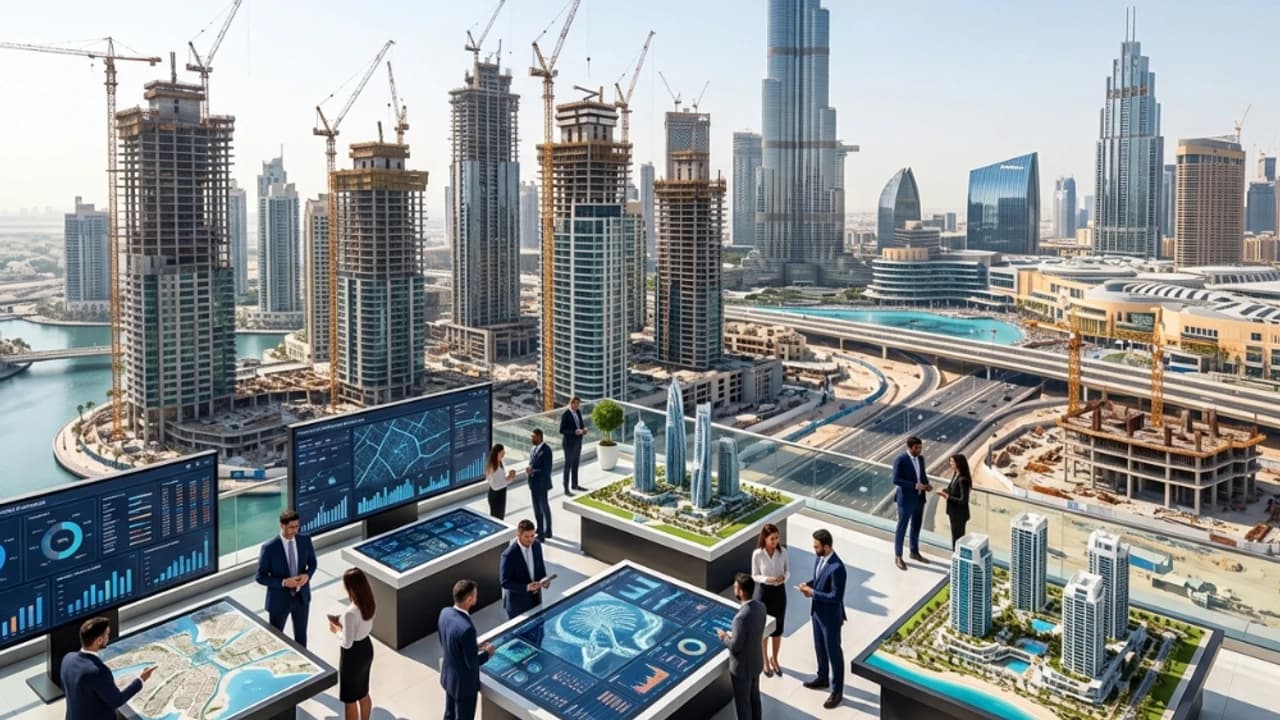
Dubai property prices dipped 1.7 percent year on year in August 2026, the first annual decline recorded in more than five years, yet the market still processed close to Dh23.4 billion worth of sales during the month, with off-plan homes making up roughly three quarters of every deal signed. That combination, softer prices alongside strong sales value, tells a very specific story. Dubai is not crashing. It is settling into a steadier, more predictable rhythm after one of the longest growth runs the emirate has ever seen, and for anyone buying, selling, or renting property here, that shift changes how you should be thinking about your next move.
If you have been watching Dubai property prices climb for years and wondered when things might level out, this report walks through exactly what happened as August opened, why it happened, and what it means depending on whether you are house hunting, listing a property, or simply keeping an eye on your investment.
What The August 2026 Numbers Actually Show
Prices Cooled For The First Time In Over Five Years
Average residential prices across Dubai slipped 1.7 percent compared to August last year. On its own, that number sounds small, and it is. This is not a correction in the dramatic sense some headlines like to suggest. It is the market catching its breath after years of near uninterrupted price growth driven by population inflows, limited ready supply, and heavy investor appetite from overseas buyers.
Analysts tracking the Dubai housing market have described this as the emirate entering a more mature cycle, where price movements start to reflect actual supply and demand balance rather than pure momentum.
Sales Volume Still Told A Strong Story
Even with prices cooling, transaction value held firm at around Dh23.4 billion for the month. That is not a sign of a market losing interest. It is a sign that buyers are still active, just more selective about where and what they are purchasing.
Off-Plan Homes Kept Their Grip On Buyer Demand
Off-plan properties accounted for roughly 75 percent of all transactions during the period. This continues a pattern that has held steady across Dubai for the last few years, where payment plans, flexible handover timelines, and lower entry price points keep off-plan units far more attractive than ready, secondary market homes for a large share of buyers.
Why Dubai Property Prices Are Finally Cooling Down
More Supply Is Coming, And Buyers Know It
New residential supply has been arriving steadily throughout 2026, and buyers are factoring that future supply into what they are willing to pay today. When more units are expected to hit the market, buyers naturally negotiate harder, and sellers of ready homes in particular have started adjusting expectations rather than holding out for last year's asking prices.
Developers Are Reading The Room Too
Mohamed Alabbar, founder of Emaar Properties, has publicly pointed to the possibility of prices adjusting somewhere between 5 and 10 percent by 2027 as new supply lands, while also saying the market should reach a healthier balance around that same period. He has ruled out steep discounting from major developers, suggesting the adjustment will be gradual rather than sudden.
There is another detail worth noting here. Unit cancellations across Dubai's off-plan pipeline climbed from an average of around 700 to roughly 1,000 units during a period of heightened regional uncertainty, before easing back down to about 550 once a regional ceasefire announcement calmed investor nerves. It is a small but telling reminder that Dubai property demand, while resilient, still responds to global and regional headlines the same way any major investment market does.
Where The Smart Money Is Moving This Month
Business Bay Overtakes Palm Jumeirah
For years, Palm Jumeirah held the crown as Dubai's busiest prime property address. In August, Business Bay took that title, driven largely by a wave of branded residence launches and resales that pulled buyer attention toward the district's growing skyline.
Branded Residences Keep Their Shine
Branded residences have quietly become one of the standout stories of Dubai real estate in 2026.
Here is what the data shows for the first half of the year:
5,184 new branded residence units were added across Dubai in H1 2026
Transaction volumes in this segment fell by 21 percent compared to the previous period
Pricing power held firm regardless, with buyers still paying a premium for hotel branded management and five star amenities
What The Branded Residence Slowdown Actually Means
Fewer transactions but steady pricing usually points to a segment where demand is real but supply has finally caught up. Buyers are not walking away from branded living. They are simply taking more time to pick the right building, the right brand, and the right floor before signing.
Rental Demand Is Where The Real Action Is
While the sales market cools, Dubai's rental market has been doing the opposite. Rental search activity jumped 44 percent, a clear signal that a large pool of residents is either new to the city or reassessing where they want to live next.
Apartment Renters Are Chasing Value In Jumeirah Village Circle
Jumeirah Village Circle, known widely as JVC, led apartment rental searches during the period.
The Numbers Behind JVC's Popularity
Median asking rent for apartments in JVC sat around Dh70,000 a year
The area continues to attract young professionals and small families priced out of more central neighbourhoods
Its mix of affordability and growing retail and community infrastructure keeps pulling in tenant interest
Villa Renters Are Flocking To Damac Hills 2
Villa seekers showed a clear preference for Damac Hills 2, with median asking rents around Dh110,000 a year.
Why Villa Communities Like This Keep Winning
Families relocating within Dubai are increasingly trading apartment living for villa communities that offer private outdoor space, community amenities, and a quieter pace, even if that means a slightly longer commute to the city centre.
What This Means If You Are Planning To Buy In Dubai This Year
A cooling price environment does not mean you should rush, and it does not mean you should wait forever either. A few practical points worth considering:
Off-plan remains the more accessible entry point for most first time buyers, thanks to staged payment plans
Ready homes in popular but not overheated areas may now offer more room to negotiate than they did twelve months ago
Branded residences still command a premium, so weigh the lifestyle value against the price gap versus non branded options
Keep an eye on upcoming supply in your target community, since areas with heavy handover pipelines may see softer pricing over the next year
Timing Your Purchase Around Supply Cycles
Buyers who track handover schedules for their preferred neighbourhood tend to negotiate from a stronger position, particularly in communities where several projects are due for completion around the same window.
What This Means If You Are Selling Or Renting Out A Property
Landlords and sellers are operating in a different environment than they were a year ago, and adjusting strategy matters:
Pricing realistically from day one tends to attract serious buyers faster than testing the market with an ambitious asking price
Rental demand remains genuinely strong, so well presented units in high demand areas like JVC and Damac Hills 2 are unlikely to sit vacant for long
Sellers of ready secondary market homes may face more competition from off-plan alternatives, so highlighting immediate move-in readiness is a real selling point
Branded or amenity rich properties still justify a premium, provided the asking price reflects current market appetite rather than last year's peak
The Regional Picture: How Dubai Compares
Dubai does not exist in isolation, and looking at the wider UAE property market adds useful context. Investment in completed Dubai property projects topped 30 billion US dollars in the first half of 2026 alone, with residential supply crossing more than 24,500 units delivered during that same window.
Just across the border, Abu Dhabi property deals between January and August 2026 exceeded Dh155 billion, already surpassing the emirate's entire 2025 total in eight months, with apartments and townhouses posting double digit annual price gains. It is a reminder that capital moving through the UAE property market has options, and Dubai's ability to keep attracting that capital depends on staying competitive on both price and product.
What To Watch For The Rest Of 2026
Looking ahead, a few threads are worth following closely:
Whether the projected 5 to 10 percent price adjustment through 2027 plays out gradually, as developers have suggested, or accelerates if new supply arrives faster than expected
How rental demand in emerging communities evolves as more residents relocate within Dubai rather than arriving from abroad
The continued rollout of Dubai's AI powered property registration platform, designed to automate registrations, manage projects, and cut down on paperwork for both agents and buyers
Whether branded residence developers slow their launch pace in response to the recent dip in transaction volumes, or keep building on the belief that long term demand justifies it
Final Thoughts
August 2026 marks a genuine turning point in how Dubai's property market behaves, not because anything broke, but because five years of near constant price growth was never going to last forever. What is happening now looks far more like a market growing up than a market in trouble. Sales are still happening, rents are still climbing in the right neighbourhoods, and developers are still building, just with a little more caution and a lot more data behind every decision.
For buyers, sellers, tenants, and landlords trying to make sense of where things go from here, working with people who track these numbers closely, the way our team does at Autograph Realtors, makes the difference between reacting to headlines and actually understanding the market underneath them. Whatever stage of the property journey you are at right now, the numbers behind August 2026 are worth paying attention to, because they are likely to shape how the rest of the year plays out.