
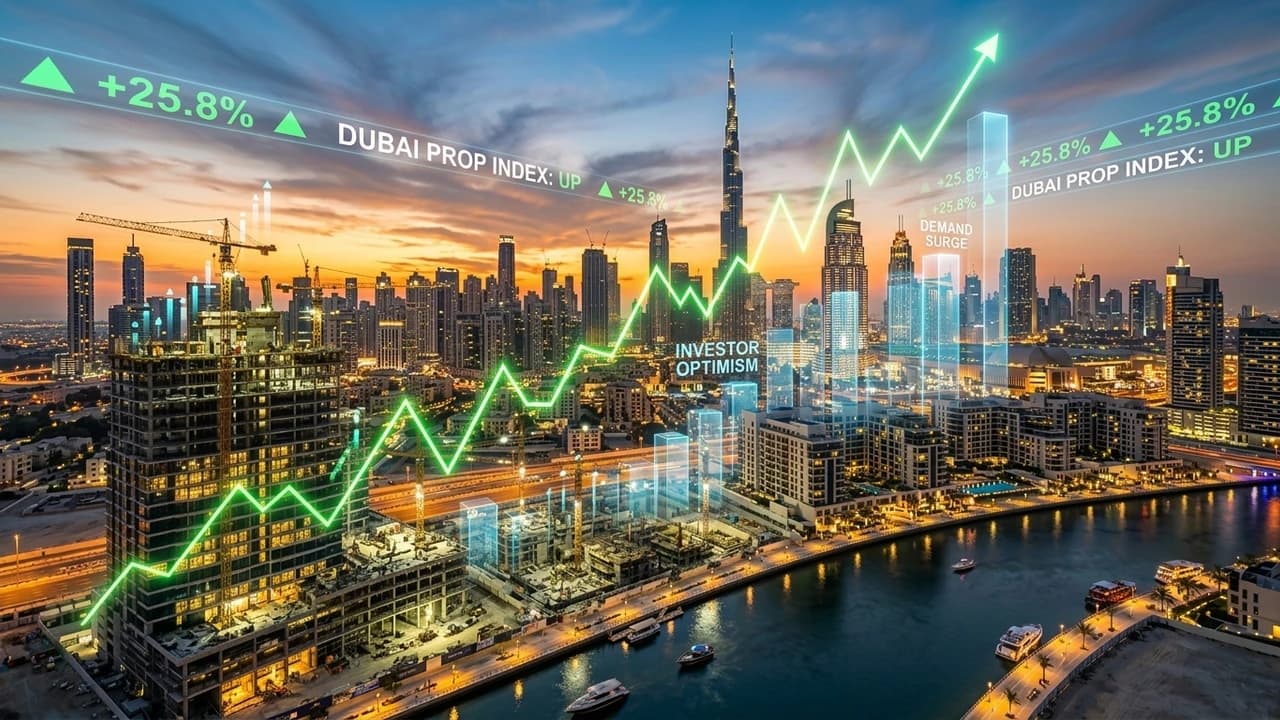
Dubai’s property sector continues to capture global attention as demand for homes, luxury apartments, and investment properties remains strong. Despite geopolitical tensions and global economic uncertainty, investors appear confident in the long-term strength of the Dubai real estate market. Over the past few years, the emirate has transformed into one of the world’s most resilient property destinations, attracting buyers from across Europe, Asia, and the Middle East.
Recent market data and industry insights suggest that investors increasingly view Dubai as a safe and profitable place to park capital. Instead of fearing a downturn or Dubai real estate market crash, many buyers are taking advantage of new developments, competitive pricing, and attractive rental yields.
Strong Demand in the Dubai Real Estate Market
The real estate market in Dubai has experienced remarkable growth in recent years. Property transactions and investment volumes continue to rise, supported by a steady inflow of international buyers and new residents.
According to industry reports, the Dubai residential market recorded more than $12 billion in property sales in February alone, covering over 15,000 transactions. This level of activity reflects strong buyer confidence even during periods of regional uncertainty.
Dubai’s property boom has also been driven by a surge in residential transactions. Nearly 200,000 housing deals worth around AED 538 billion were recorded in recent years, highlighting the scale of investor participation in the market.
Several factors continue to fuel this demand:
A growing population and rising expatriate workforce
High rental yields compared to global cities
Investor-friendly government policies
Long-term residency visas linked to property investment
These fundamentals have helped the city maintain strong momentum even during global economic fluctuations.
Why Investors Are Looking Past Global Tensions
While geopolitical developments sometimes raise concerns about regional stability, investors appear to view such disruptions as temporary. Many market analysts believe Dubai’s real estate sector has matured significantly over the past decade, making it more resilient to external shocks.
Industry experts highlight that the emirate has successfully navigated multiple economic cycles over the past four decades. As a result, global buyers often see Dubai property as a long-term asset rather than a short-term speculative investment.
Dubai’s strategic position as an international business hub also reinforces investor confidence. The city offers a unique combination of lifestyle advantages, safety, infrastructure, and tax efficiency. These elements continue to attract entrepreneurs, high-net-worth individuals, and institutional investors.
In addition, government initiatives such as the Golden Visa program, digital economy reforms, and infrastructure development have strengthened the emirate’s reputation as a global investment destination.
Luxury Segment Continues to Break Records
One of the most striking trends in the Dubai real estate market is the continued growth of the luxury property segment. High-net-worth individuals from around the world are increasingly purchasing waterfront villas, penthouses, and branded residences.
Recent record-breaking sales demonstrate the strength of this segment. Ultra-luxury apartments have sold for hundreds of millions of dirhams, highlighting the demand for trophy properties among global investors.
Luxury communities such as Palm Jumeirah, Dubai Hills Estate, and Downtown Dubai continue to attract affluent buyers seeking premium lifestyle experiences. These developments often feature private beaches, world-class amenities, and smart home technology.
For international investors, Dubai’s luxury market offers something few cities can match: a combination of high-end living and strong capital appreciation potential.
Addressing Concerns About a Dubai Real Estate Market Crash
Despite the strong performance of the sector, discussions about a potential Dubai real estate market crash frequently appear in market commentary. However, most experts believe such concerns are overstated.
Historically, Dubai’s property market has experienced cycles of rapid growth followed by stabilization rather than dramatic collapses. Today, the market is supported by stronger regulations, transparent data reporting, and more responsible lending practices.
Several factors also reduce the likelihood of a sudden downturn:
Diversified international investor base
Strong tourism and business sectors
Population growth and housing demand
Government oversight and regulatory improvements
Furthermore, developers have become more disciplined in project launches compared to earlier market cycles. This helps prevent oversupply while maintaining steady growth in new housing developments.
The Role of Foreign Investors in UAE Real Estate
Foreign investors remain a major driving force behind the UAE real estate sector. Buyers from Europe, India, China, and the United Kingdom have played a significant role in shaping demand for Dubai properties.
Many global investors view Dubai as a safe haven for capital, particularly during periods of economic or political uncertainty. The emirate’s strong legal framework, absence of property taxes, and high rental yields make it particularly attractive for international buyers.
Dubai’s real estate market also benefits from wealth migration trends. Entrepreneurs and professionals relocating to the UAE for business opportunities often choose to purchase property rather than rent.
This influx of new residents has strengthened both the sales market and the rental sector, contributing to sustained growth across the property landscape.
Rising Property Prices and Long-Term Growth
Since the pandemic period, Dubai has experienced one of the strongest housing cycles globally. Residential property prices have risen between 60% and 75% since 2021, reflecting strong demand and limited supply in prime locations.
Rental yields in Dubai also remain among the highest in the world, often ranging between 6% and 8% annually, depending on the location and property type. These returns continue to attract investors seeking stable income streams.
Infrastructure development, tourism growth, and major projects such as Dubai’s long-term urban expansion plans are expected to support property values in the coming years.
As the city prepares for continued population growth and economic diversification, the real estate sector is likely to remain a key pillar of Dubai’s economy.
Future Outlook for the Dubai Real Estate Market
Looking ahead, the outlook for the real estate market in Dubai remains largely positive. Analysts expect steady growth supported by strong investor demand, infrastructure development, and continued population expansion.
The market may experience periods of price stabilization as new housing supply enters the market, but long-term fundamentals remain strong. Investors continue to view Dubai as a global gateway for business, tourism, and lifestyle.
With increasing international interest, innovative residential developments, and supportive government policies, Dubai’s property sector appears well positioned for sustainable growth.
Conclusion
The Dubai real estate market continues to demonstrate resilience and global appeal. While economic uncertainty and geopolitical tensions occasionally raise questions about market stability, investor confidence remains strong.
Rather than fearing a Dubai real estate market crash, many buyers are focusing on the long-term opportunities offered by the emirate’s dynamic property sector. Strong demand, record transactions, and global investor interest all point toward continued momentum.
As Dubai strengthens its position as a leading international hub for business and lifestyle, the UAE real estate market is likely to remain one of the most attractive investment destinations in the world.